



Michael Platt and the Evolution of Alternative Investment Management
Michael Platt has become one of the best-known figures in global hedge fund investing through his work at BlueCrest Capital Management. The firm developed from a multi-strategy hedge fund into a family-office structure, with Platt continuing to oversee significant investment activity.
His career provides an interesting perspective on how sophisticated investors approach changing market conditions. Rather than relying on a single asset class, multi-strategy investing can allow capital to move between rates, credit, currencies and other markets as opportunities emerge.
The Financial Times has described BlueCrest as a “hedge fund turned family office”, reflecting the significant transformation in its structure and investment approach.
Platt’s experience also highlights the importance of risk management. Successful investing during market dislocations requires identifying opportunities while ensuring that positions can withstand unexpected changes in liquidity, volatility and correlations.

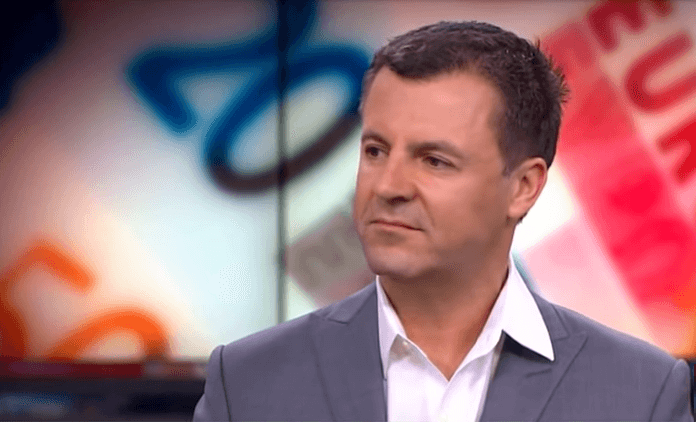
“Platt’s experience also highlights the importance of risk management”
WEALTH TRAINING COMPANY
Liquidity Can Become a Major Advantage During Market Stress
Liquidity is often taken for granted when markets are functioning normally. Investors can buy and sell securities efficiently, financing is readily available and price differences between similar assets tend to remain relatively narrow.
During periods of market stress, however, liquidity can disappear quickly. Forced selling can create unusually large price movements and cause fundamentally sound assets to trade at significant discounts.
This is where investors with available capital can potentially gain an advantage. They can provide liquidity when other market participants are attempting to reduce exposure.
Bloomberg has highlighted the vulnerability created by this environment, warning that “markets are stable and liquidity is high, but they are fragile”. For alternative investors, recognising this fragility can be important when deciding how much cash or immediately deployable capital to maintain.

“markets are stable and liquidity is high, but they are fragile”
BLOOMBERG
Liquidity therefore has an opportunity cost during calm periods, because unused capital may reduce returns. Yet that same capital can become extremely valuable when markets dislocate and attractive assets become available at distressed prices.
Private Capital Creates New Opportunities and Constraints
The growth of private capital has changed the way investors access companies, credit and infrastructure. Private equity, private credit and family offices can deploy capital outside traditional public markets, potentially taking longer investment horizons.
For an investor such as Platt, private capital can provide flexibility that differs from the constraints faced by open-ended funds with frequent redemption requirements. However, private investments can also introduce significant liquidity challenges because assets may be difficult to sell quickly.
Recent developments in private credit demonstrate the importance of this issue. Reuters reported that private credit portfolio values came under pressure as spreads widened and financial stress increased among some borrowers.
This creates an important distinction between having capital and having genuinely liquid capital. An investor may control substantial assets but still have limited ability to deploy funds quickly if those assets are locked into long-term investments.
Effective portfolio construction therefore requires understanding not only expected returns, but also the timing and reliability of cash flows.
“For investors studying Michael Platt’s approach, the most important lesson may be the relationship between opportunity and risk”
– Wealth Training Company
Market Dislocations Can Create Asymmetric Investment Opportunities
Market dislocations occur when prices move significantly away from levels that investors believe are justified by underlying fundamentals. They can result from economic shocks, geopolitical events, forced selling, changes in monetary policy or sudden shifts in investor sentiment.
For disciplined investors, these periods can create opportunities because emotional selling may push prices below fundamental value. Credit markets can be particularly interesting because stressed borrowers may trade at substantial discounts despite having recoverable assets or sustainable businesses.
However, investing during a dislocation requires patience and strong risk controls. Cheap assets can become cheaper, and apparently temporary problems can develop into permanent losses.
This is particularly important when leverage is involved. A strategy may have attractive long-term economics but still suffer severe losses if financing requirements force positions to be closed at the wrong moment.
Platt’s career illustrates the broader principle that exploiting dislocations requires both conviction and liquidity. Investors need enough capital flexibility to remain positioned while markets recover.
The Future of Investing Through Market Dislocations
The investment landscape is becoming increasingly complex as public markets interact with private capital, hedge funds, private credit and family offices. At the same time, leverage and liquidity conditions can change rapidly when volatility increases.
For investors studying Michael Platt’s approach, the most important lesson may be the relationship between opportunity and risk. Market dislocations can produce exceptional opportunities, but only investors with appropriate liquidity, diversification and risk controls can necessarily take advantage of them.
The Financial Times has noted that hedge funds and hedge-fund-like businesses have become increasingly important clients for investment banks, partly because of their growing financing requirements.
This expanding ecosystem means liquidity itself is becoming an increasingly important investment consideration. Capital that appears unproductive during calm markets can become strategically valuable when forced selling creates mispricing.
For investors, the objective is therefore not simply to predict the next market crisis. It is to build portfolios capable of surviving uncertainty and retaining the flexibility to invest when other participants are forced to retreat.