
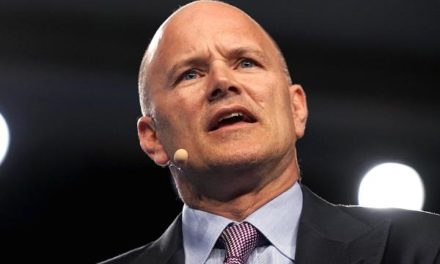


Nicolai Tangen and a New Approach to Sovereign Wealth Investing
Nicolai Tangen, chief executive of Norges Bank Investment Management, oversees the world’s largest sovereign wealth fund. His investment background includes founding AKO Capital before taking responsibility for managing Norway’s Government Pension Fund Global.
His approach has traditionally emphasised long-term investment, diversification and disciplined portfolio construction. However, changing conditions in global bond markets are creating new questions about how large institutional investors should allocate capital.
In September 2026, Norges Bank Investment Management proposed reducing the government bond component of its benchmark from 70% to 50%. The proposal would particularly reduce the fund’s exposure to US Treasuries while increasing allocations to non-government debt and mortgage-backed securities.
The scale of the proposed change makes Tangen’s approach especially relevant for investors considering the future role of government bonds in diversified portfolios.


“His approach has traditionally emphasised long-term investment, diversification and disciplined portfolio construction”
WEALTH TRAINING. COMPANY
US Treasury Risk Becomes a Bigger Portfolio Consideration
US Treasuries have traditionally been regarded as one of the world’s most important defensive assets. They provide liquidity, deep markets and a widely used benchmark for global interest rates.
However, rising government debt, higher long-term yields and changing inflation expectations have created new challenges for investors. Norges Bank Investment Management’s proposal could reduce its Treasury holdings by almost $80 billion from its current position of approximately $215 billion.
Reuters reported that the proposed changes would involve “significantly cutting its exposure to U.S. Treasuries”.
The decision does not represent a rejection of the US dollar. Instead, the proposed strategy would shift some exposure towards other forms of dollar-denominated debt.
This distinction is important. Investors can reduce exposure to US government bonds without abandoning the dollar or US financial markets altogether.

“significantly cutting its exposure to U.S. Treasuries”
REUTERS
Diversification Beyond Traditional Government Bonds
The proposed changes suggest a broader interpretation of diversification. Rather than relying predominantly on government debt, the fund could increase exposure to mortgage-backed securities and other government-related bonds.
According to the proposal, the objective is to gain greater exposure to different risk premiums while maintaining sufficient liquidity. The fund would also increase its allocation to Japanese government bonds, while reducing government bond exposure in the euro area.
The approach reflects a changing understanding of what constitutes a defensive portfolio. Government bonds remain important, but investors may increasingly look across a wider range of high-quality fixed-income assets.
For sovereign wealth funds, this can be particularly significant because their investment horizons are extremely long. Small changes in expected returns can have substantial effects when applied across hundreds of billions of dollars.
Tangen’s strategy therefore provides a useful case study in how institutional investors can rethink traditional asset allocation without abandoning liquidity or risk management.
“$80 billion of U.S. Treasury securities being offloaded” – Fortune
Sovereign Wealth Funds Face a Changing Global Investment Landscape
The world’s largest institutional investors operate in an environment increasingly shaped by fiscal pressures, geopolitical uncertainty, inflation and changes in global capital flows.
Norway’s sovereign wealth fund is unusually influential because of its enormous size and its ownership of assets across international markets. Any significant changes to its benchmark can therefore attract attention from other institutional investors.
The fund’s proposal would reduce government bonds to 50% of its bond benchmark, while increasing exposure to non-government US debt. The overall US dollar weighting would remain broadly stable, showing that diversification does not necessarily mean moving away from the United States entirely.
Fortune reported that the proposed changes would mean “$80 billion of U.S. Treasury securities being offloaded”.
The development could encourage other large investors to reconsider the balance between sovereign debt, securitised assets and other forms of fixed income.
What Tangen’s Strategy Could Mean for Global Investors
Nicolai Tangen’s evolving approach highlights a broader question facing investors: should government bonds continue to dominate defensive asset allocation when fiscal risks and long-term borrowing costs are changing?
The answer is unlikely to be identical for every investor. Individual portfolios have different liquidity requirements, risk tolerances and investment horizons.
For Norway’s sovereign wealth fund, however, the proposed changes indicate that diversification may increasingly involve moving beyond conventional government debt while maintaining substantial exposure to the world’s major currencies and financial markets.
The strategy also demonstrates the importance of separating asset exposure from currency exposure. Reducing US Treasury holdings does not necessarily mean reducing dollar exposure, particularly when capital can be redirected into mortgage-backed securities and other US dollar assets.
For investors watching global bond markets, Tangen’s approach could therefore become an important reference point. It suggests that the next stage of sovereign wealth management may focus less on simply owning government bonds and more on identifying the combination of liquidity, diversification and risk premiums that can deliver sustainable long-term returns.